People worry about renting a dumpster because they’re afraid it’ll crack, dent, or damage their driveway. But here’s the thing: the weight of a dumpster alone usually isn’t what causes driveway damage. A loaded 30-yard roll-off can weigh thousands of pounds, but that weight is distributed across the dumpster’s support points rather than concentrated in one small area. Your driveway also regularly handles the weight of delivery trucks, moving trucks, and other heavy vehicles.
What matters more is the condition of the driveway, where the dumpster is placed, and how it’s delivered. An older or already weakened driveway is more vulnerable, especially if the dumpster is dropped, dragged, or placed without proper protection. That’s why using boards or protective pads under the dumpster can help reduce the risk of surface damage.
Dumpsters can still damage a driveway sometimes, but this is rare, and when it happens, it’s rarely simply because the dumpster was heavy. It’s usually something more specific. The driveway was already cracked or weakened before the dumpster arrived; it was placed on a soft or uneven spot; or the weight was distributed unevenly across a small area instead of being spread out.
Key Takeaways
- A loaded dumpster puts little pressure on a driveway, about 50 to 80 PSI on the wheels. That is less than a loaded delivery truck.
- Most driveways don’t need anything beyond boards to stay protected.
- Decorative concrete, pavers, and porous surfaces need a bit of care.
- The common cause of damage is a crack that was already there before the dumpster showed up.
- Grass under a dumpster won’t survive the rental. Will need to be replanted afterward.
- Marks left on driveways fade on their own after some time.
The Ways a Dumpster Can Actually Cause Damage:
Scrapes
Scrapes are the serious type of damage, but they are also the least common. When a scrape does happen, it is usually shallow and simple enough to repair.
Stains
Stains usually happen when someone tosses liquid into the dumpster and it leaks out onto the driveway. Leaving a dumpster sitting in the same spot for too long can also cause rust stains to form on the ground underneath.
Impressions or Marks
When a dumpster sits on a surface like grass, the weight can press down into the ground. These marks are almost always temporary and fade within a few hours to a few days.
Litter
Loose trash can end up scattered around the dumpster area, especially if the dumpster is filled with items like paper and wrappers that catch the wind and blow away.”
Cracks
Cracking usually has less to do with a dumpster itself and more to do with a driveway that was already weak. A small hairline crack that has been sitting there for years can widen under any weight, whether that is a dumpster, a moving truck, or even a car parked in the same spot for too long.
Sun Discolouration
Leave a dumpster in one spot for a while, and the ground underneath stays shaded while the rest of your driveway fades a bit in the sun. Once you move the dumpster, you’ll see a rectangle that’s a shade darker than everything around it. It usually blends back in after some time.
Wheel Indentations
On hot days, asphalt can soften just enough for a dumpster’s wheels to leave shallow indentations. This is not damage; it is more like a temporary dent that firms back up once the asphalt cools down.
Rust Marks
If a dumpster sits through rain or humidity during a rental, the metal frame can start to rust and leave faint orange‑brown marks on the surface below. This is more common with rentals and is usually only cosmetic.
What a Careful Dumpster Delivery Looks Like?
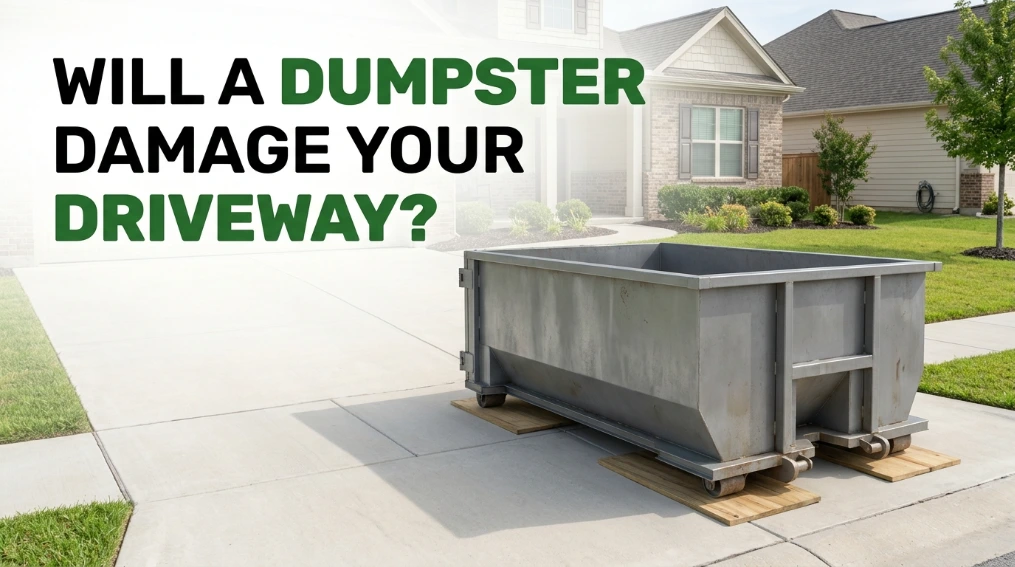
A dumpster delivery isn’t just a truck pulling up and dropping the container off. There’s more to it than that. First, the delivery driver checks the driveway for any existing cracks or uneven spots before unloading anything. Then boards, 2×10 or 2×12 lumber, are placed under the wheels. The dumpster is lowered slowly onto those boards, checked for level, and left in place. Once the rental period is over, the boards leave with the dumpster.
When It’s Worth Adding Extra Protection?
Boards alone are enough for most driveways. But a few surfaces call for more care. Decorative concrete, pavers, and porous surfaces need a sheet of plywood on top of the boards. This is because these surfaces are not as strong as concrete.
Older concrete with cracks may need extra care too. Asphalt in hot weather may get soft and may become the reason for cracks. These marks usually go away on their own.
What to Expect for Surfaces?
Different surfaces handle a dumpster differently. Standard concrete is usually fine with boards. Decorative concrete needs plywood on top of the boards. Asphalt is usually fine. It can get soft in very hot weather.
New pavers need boards and plywood. Old pavers are usually okay with boards. Gravel will compact a little under the dumpster. It can be raked back into place. Grass will die if a dumpster is put on it and will need to be replanted. Dirt is usually okay. It can get soft if it is wet.
| Surface | What to Expect |
| Standard concrete | Fine with boards alone |
| Decorative concrete | Add plywood over boards. |
| Asphalt | Fine unless very hot out. |
| Aged pavers | Boards alone are fine. |
| Gravel | Compacts slightly; rake after |
| Tile | Avoid placing it here. |
| Grass | Dies under the box; needs reseeding |
| Dirt | Fine unless it’s wet |
What You Can Do to Avoid Dumpster Damage?
Making a plan before your dumpster rental arrives puts the odds in your favour. Think about how the dumpster will sit there and what that spot on your property is normally used for. Then take a simple step: Clear the area so the delivery goes smoothly.
Your rental company can give you the dumpster’s dimensions, so take a few large steps to picture where it will actually sit. Use planks if it’s going on soft ground since they spread the weight out and reduce the impact on the surface below. Think about the truck driver. Whether they can realistically back into the space you’ve chosen.
Pick the Placement
Dumpsters are heavy, tall, and long, so where you place one matters. If you’d hesitate to drive your car onto a certain spot, it’s probably not the right place for a dumpster either. In general, try to avoid driveways, areas prone to flooding, important access routes you’ll need during the rental, and spots that are hard to reach.
Think About What Goes Into It
Dumpster rental companies will clearly explain what can and cannot go into a dumpster. If your company does not spell it out, it is worth thinking it through on your own. Ask yourself what would happen if something leaked, whether that is paint, oil, or anything else. Being a little selective about what you toss in is one of the ways to avoid stains on a driveway.
Avoid Overfilling
An overfilled dumpster is more likely to spill litter into the surrounding area, especially since most containers are open on top. If a storm rolls through, that is a mess waiting to happen. Overfilled dumpsters also weigh more, which raises the odds of scraped driveways or deeper impressions on the ground.
Don’t Keep it Longer Than You Need to
Letting a dumpster sit for more than a week or two raises the chances of rust stains or, in some cases, a faint sun‑bleached mark where it blocked sunlight. It helps to schedule a pickup time before the dumpster even arrives. Most rental companies will follow up to keep things on schedule, and renting for periods usually costs more anyway.
How to Protect Your Driveway Yourself?
You do not need much to lower the risk of driveway damage on your own. A simple setup works well: one sheet of 4×8 plywood, ¾ inch, along with a couple of 2×6 boards eight feet long placed under the steel wheels of a dumpster. Some rental companies also offer driveway protection pads for an added fee. Will take care of the setup for you.
What About Placing It in the Street Instead?
Some people consider putting a dumpster in the street or driveway to avoid any risk of damage altogether. It is an option. Most towns have specific rules around this, and you will likely need permission or a permit from local authorities before doing so.
Who’s Responsible if Damage Happens?
Most dumpster rental companies include a damage waiver or clause that limits their liability if something goes wrong. That is why taking a few simple precautions, such as using boards under a dumpster’s wheels, is worth the small effort. It protects a driveway. Avoids confusion later about who is responsible for the cost.
What to Do if Your Driveway Gets Damaged?
If damage does happen, the first step is to contact the rental company and let them know. Reputable companies take this seriously. We will work with you to make it right. That said, sometimes the damage is not really about a dumpster itself; it comes down to how or where it was placed. In those cases, it is best to clean up what you can or bring in a professional for repairs if needed. Ground impressions and flattened grass typically bounce back within a week on their own.
What Your Driveway Should Look Like After the Dumpster Is Gone?
Once the dumpster is picked up, a driveway should look about the same as it did before. The surface should be unmarked. If the dumpster sat on grass or gravel, expect a short recovery period; grass will need replanting, and gravel may just need a rake to smooth back out.
Frequently Asked Questions
Will a dumpster crack my driveway?
It is unlikely if a driveway is already in good condition and boards are placed under the dumpster’s wheels during delivery.
How much pressure does a loaded dumpster put on my driveway?
Around 50 to 80 pounds per inch on a dumpster’s wheels, which is less than most people expect
Do I need protection if I have decorative concrete?
Yes, adding plywood on top of boards is a move for decorative concrete.
Can a dumpster be placed on grass?
It can, but the grass underneath will die off and need to be replanted once the dumpster is removed.
Is asphalt safe in summer heat?
Mostly. Soft asphalt might pick up a faint mark, but it usually levels out again within a day. We also need to keep formatting: bullet lists, tables, etc.
Do rental companies offer driveway protection?
Many do, usually for an extra fee. Some will bring their own protective boards or pads, while others may ask you to provide the wood yourself.
Can I place a dumpster on pavers without damage?
Older pavers usually hold up fine with boards alone, but newer pavers do better with both boards and a sheet of plywood on top for extra support.