How to Maximize Space in a Dumpster | Expert Loading Tips
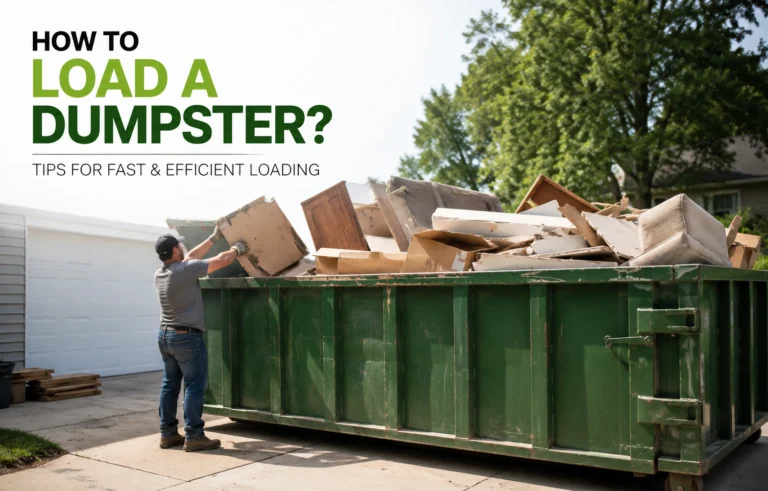
Getting the most out of your dumpster isn’t just about convenience; it’s about saving money and your time. No matter if you’re renovating a house, managing a construction site, or decluttering a property, how you load your dumpster makes a real difference. Pack it right, and you avoid extra pickups, overage fees, and unnecessary delays. Pack it wrong, and you’re paying for space you never really used.
That’s why a little strategy goes a long way. Below are eight simple but effective tips to help you load smarter, fit more into every haul, and get the most value out of your dumpster rental.
Key takeaways
- Choose the right dumpster size for your project before you start.
- Plan your loading strategy ahead of time instead of tossing items in randomly.
- Break down bulky items to eliminate wasted space.
- Load heavy and flat materials first to create a stable base.
- Place larger, bulkier items strategically around that base.
- Stack waste tightly to avoid gaps and spaces.
- Fill remaining gaps with smaller debris.
- Distribute weight evenly throughout the dumpster to keep the load safe and stable.
- Know which items aren’t allowed, and understand how full you can legally load the dumpster.
- Load smart and follow the guidelines to get full value out of every render rental without the extra costs or hassle.
How to Maximize Space for Your Dumpster Rental?
Maximizing dumpster space means loading heavy and flat items first, breaking down bulky debris, and filling gaps with smaller waste. This can increase usable capacity by 20 to 30 percent and help you avoid renting a second container.
Step 1: Choose the Right Dumpster Size for Your Project
Dumpster sizes typically range from 10 to 40 cubic yards. Picking the correct size upfront prevents both wasted space and overflow fees. A 10-yard dumpster suits small cleanouts like single room renovations or garage clear outs. A 30 or 40-yard container fits full home renovations or construction debris. Estimating volume before booking, not after, is the biggest factor in avoiding a second rental.
Step 2: Plan Your Loading Strategy Before You Begin
A loading plan sorts debris into categories such as heavy and flat, bulky, and small or loose, before anything goes into the dumpster. This lets items go in the right order instead of being tossed in randomly. Most wasted space happens because people toss odd shaped items in without a plan, leaving air gaps everywhere.
Step 3: Break Down Large Items to Save Valuable Space
Break furniture down before it goes in. Take the couch apart, cushions off, frame separated, legs removed, and you’ll cut its footprint by half or more compared to tossing it in whole. The same goes for cardboard boxes, flatten them properly. A pile of flat boxes stacks neatly, but a few boxes left puffed up can eat as much space as a small appliance. So, breakage of every big item is necessary while loading.
Step 4: Start with Heavy and Flat Materials at the Bottom
Place heavy, flat materials like drywall sheets, tile, or lumber at the base. This creates a stable, level foundation that supports the weight of everything loaded on top. It also protects the dumpster and prevents shifting during transport. If you skip this step, your load starts leaning once the truck starts moving. The solid base makes it easier to stack different layers of load over it.
Step 5: Load Bulky Items Strategically
Bulky items such as furniture and appliances should go in next, placed along the walls or corners of the dumpster rather than the center. This keeps the middle space open for stacking smaller debris. Plac`ing bulky items with a plan, not just wherever there is room, is what separates a full load from a half empty one.
Step 6: Stack Waste Tightly to Eliminate Empty Space
Tight stacking means fitting items together like a puzzle, using flat surfaces to interlock pieces and reduce the air gaps between them. Every inch of unused air space is capacity you are paying for but not using.
Step 7: Fill Gaps with Smaller Debris
Smaller debris, such as broken tiles, branches, and packaging material, should be used to fill the remaining gaps between larger items rather than being piled separately on top. This step alone can recover 10 to 15 percent of a dumpster’s total volume that would otherwise go to waste.
Step 8: Distribute Weight Evenly Throughout the Dumpster
Spread the weight out evenly across the whole dumpster, not just one end. This keeps it from tipping during pickup and helps you stay under the weight limit. Piling heavy debris in one corner is a common mistake that can trigger overage charges even when the volume limit has not been reached.
What Items Should You Never Put in a Dumpster?
Some items require special handling and should never be placed in a dumpster. Disposing of prohibited materials the wrong way can create safety hazards, delay your pickup, and result in additional disposal fees.
- Hazardous materials: Paint thinner, motor oil, pesticides, herbicides, and cleaning chemicals can’t go to landfills under EPA guidelines and should be taken to a household hazardous waste facility.
- Batteries: Car batteries, lithium-ion batteries, and other rechargeable batteries can ignite when crushed and should always be recycled separately.
- Tires: Tires aren’t accepted because they trap air, don’t compact properly, and require specialized recycling.
- Electronics: TVs, computers, printers, and other electronic devices contain heavy metals and should be taken to a certified e-waste recycling facility.
- Appliances with refrigerants: Refrigerators, freezers, and window AC units require refrigerant removal before disposal.
- Wet paint and liquids: Wet paint and other liquids can leak and contaminate an entire dumpster load. Paint should be completely dried before disposal or taken to a hazardous waste collection site.
- Medical waste: Needles, expired medications, and biohazard materials require specialized disposal and should never be placed in a dumpster.
If you’re ever unsure about an item, check with your dumpster rental company before loading it. Disposal rules vary by location, and a quick call can help you avoid unexpected charges, delays, or rejected pickups.
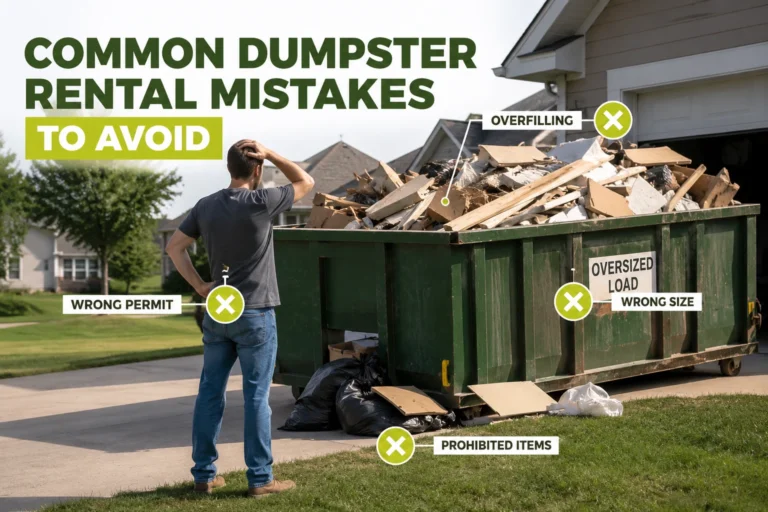
What Common Mistakes Waste Space in a Dumpster Rental?
Tossing items randomly, leaving boxes and furniture whole, and stacking loosely instead of tight are the biggest reasons people run out of dumpster space too soon. Most of these mistakes are easy to avoid once you know what to look for.
Loading without a plan: Throwing debris in as it comes, instead of sorting by size and weight first, is what causes most wasted space. Items end up stacked at odd angles, leaving gaps that never get filled.
Leaving boxes and furniture intact: Cardboard boxes left puffed up and furniture tossed in whole can eat up to two or three times the space they need to. Flattening boxes and breaking down furniture before loading solves this in minutes.
Loading heavy items last: Putting light or bulky items in first, then heavy debris on top, crushes everything underneath and creates uneven, unstable piles. Heavy, flat materials always belong at the bottom.
Piling instead of stacking: There’s a real difference between piling junk on top of a load and stacking it with a plan. Piling leaves air pockets everywhere, while stacking fills the dumpster wall to wall.
Ignoring gaps between items: Small gaps around furniture, appliances, and bulky debris add up fast. Leftover branches, broken tile, or loose scraps can fill those spaces instead of getting thrown on top, where they take up extra room.
Overloading one side: Dumping everything on one end instead of spreading weight evenly across the container often means the dumpster looks full long before it actually is. It also risks tipping during pickup and can push you over the weight limit even when there’s still usable space left.
Not measuring the project first: Renting a size based on guesswork, instead of estimating the actual volume of debris, is why so many people end up paying for a second dumpster. A little upfront math saves a second delivery fee later.
Fixing these mistakes usually means one thing: load with intention, instead of convenience. A few extra minutes of sorting and stacking can be the difference between fitting everything in one dumpster or paying for a second pickup.
How Full Can You Fill a Dumpster Rental?
Most dumpster rental companies allow you to fill a dumpster only up to the fill line, which sits level with the top rim of the container. Anything stacked above that line is considered overfilled, and drivers are generally not allowed to haul it away because debris can fall off during transport. If your dumpster is overloaded, your pickup may be delayed, rejected, or subject to additional overfill charges.
Weight limits are just as important as the fill line. Every dumpster includes a maximum weight allowance based on its size. Heavy materials like concrete, dirt, roofing shingles, brick, and tile can exceed that limit long before the dumpster appears full, resulting in extra charges for every additional ton.
The best way to get the most out of your dumpster is to load it efficiently without going over the limit. Break down bulky items, stack materials tightly, and fill empty spaces with smaller debris. A properly loaded dumpster that stays level with the fill line can hold significantly more than one that’s loaded carelessly while still meeting hauling requirements.
FAQs About Maximizing Dumpster Space
Should I declutter before my dumpster arrives?
Yes. Walking through your home a week or two before delivery helps you identify what will be thrown away, donated, recycled, or sold. Creating separate piles beforehand allows you to spend your rental period loading the dumpster instead of deciding what to keep.
Is it better to fill a dumpster all at once or over several days?
Most homeowners get better results by working steadily over several days. A room-by-room approach keeps the project manageable while giving you enough time to uncover hidden clutter in closets, garages, attics, and storage areas.
What should I throw away first when using a dumpster?
Start with large, broken, or unusable items like damaged furniture, old mattresses, shelving, worn-out cabinets, and bulky junk. Removing these first opens up space inside your home and makes the remaining cleanup much easier.
Should I donate items before throwing everything into a dumpster?
If an item is clean, safe, and still usable, donating it is often a better choice. Reserve dumpster space for broken, damaged, heavily worn, or non-reusable materials that charities are unlikely to accept.
Can I save space by waiting until the dumpster is almost full before loading bulky items?
No. Large furniture and oversized items should usually go in first so they can be positioned efficiently. Filling the dumpster with small debris first often leaves awkward gaps that bulky items can’t fit into later.
Can I mix household junk with renovation debris in the same dumpster?
In most cases, yes. Household junk, furniture, wood, drywall, and many remodeling materials can usually be loaded together. However, hazardous waste, chemicals, paints, batteries, and certain restricted items are typically not accepted, so always check your rental company’s prohibited items list before loading.
What’s the biggest mistake people make when filling a dumpster?
The most common mistake is throwing items in randomly. Breaking down bulky materials, loading large items first, distributing weight evenly, and filling gaps with smaller debris allows you to fit significantly more into the same container while staying below the fill line.
Does breaking down furniture really save dumpster space?
Yes. Removing legs, cushions, shelves, and other detachable parts significantly reduces the amount of space furniture occupies, allowing you to fit more debris into the dumpster.
Should cardboard boxes be flattened before loading a dumpster?
Yes. Flattening cardboard prevents unnecessary air gaps and creates more usable space for other materials. It also makes stacking easier.
Should similar materials be grouped together?
Yes. Keeping similar materials together makes loading more organized, improves stacking, and reduces unused space throughout the dumpster.
Does the shape of debris affect dumpster capacity?
Yes. Bulky or irregularly shaped items create empty spaces if loaded carelessly. Breaking them down or rotating them before loading helps maximize available space.
Can proper loading reduce the number of dumpster rentals?
Yes. Using every available inch of space often allows you to complete your project with a single dumpster instead of renting an additional container.
Ready to Get the Most Out of Your Dumpster Rental?
Following these loading tips helps you maximize space, reduce waste, and avoid unnecessary costs. Choosing the right dumpster size is just as important. NB Dumpster Rentals provide 10-yard, 12-yard, 15-yard, 20-yard, 30-yard, and 40-yard roll-off dumpsters for home cleanouts, renovations, roofing jobs, construction projects, and more. Find the dumpster size that fits your project and avoid paying for space you don’t need.