Pro Tips for Loading Your Roll-Off Dumpster
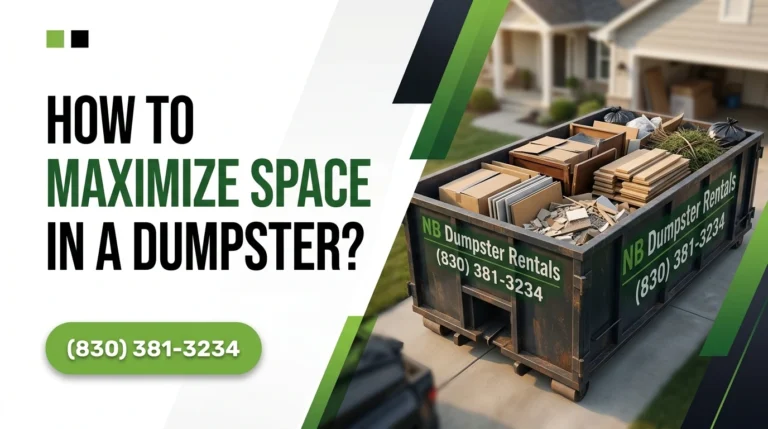
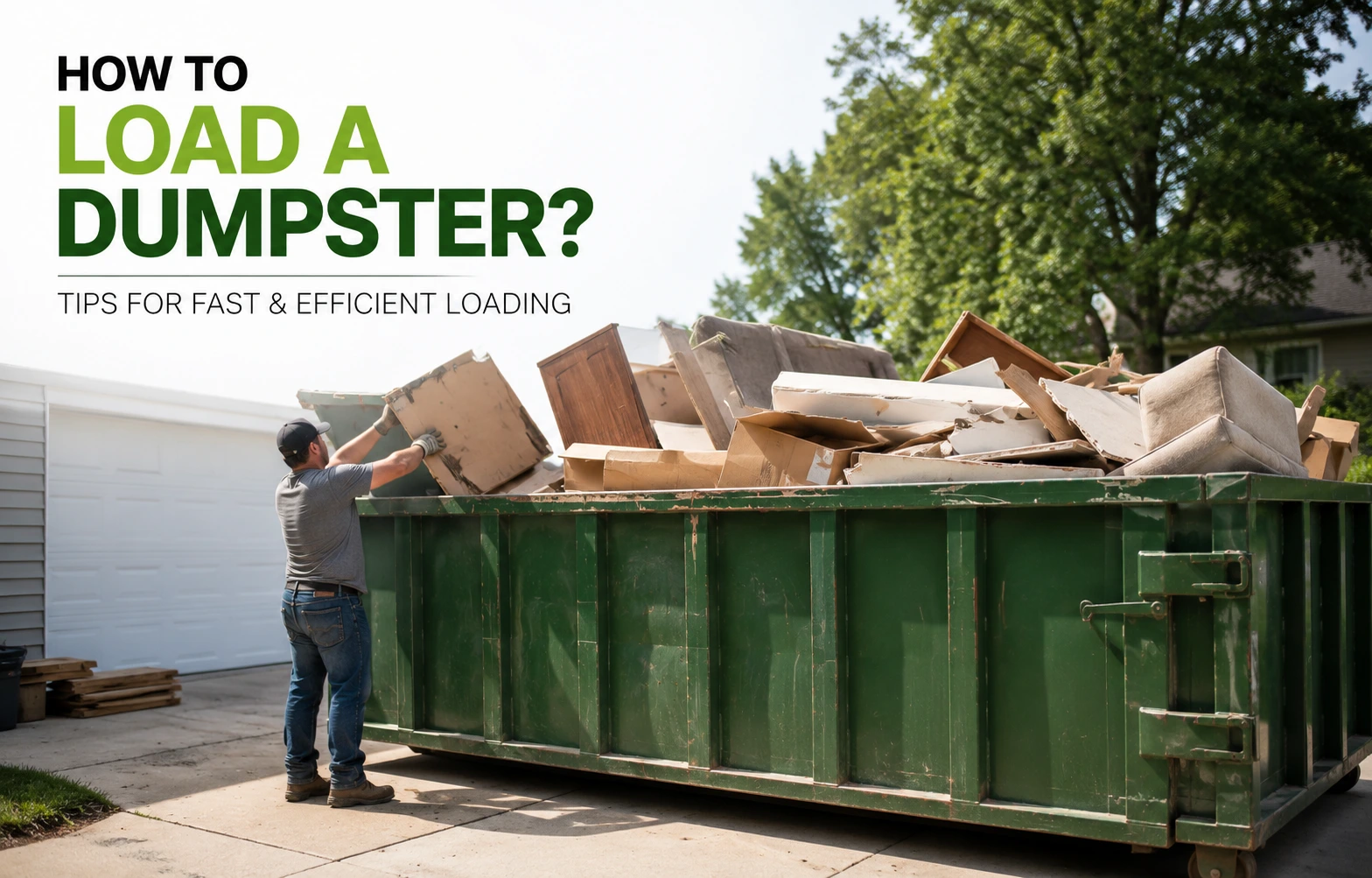
When you load a dumpster, make sure to fill it in a way that uses most of the space you are paying for. Take items and break them down so they take up less room. Then build a base using heavy things. After that, put items on top. This will give the dumpster a base. Try to keep the load below the fill line to prevent problems and extra costs.
Key Takeaways
- Start With a Plan Before You Start Loading
- Create a Strong Base Layer With Flat Materials
- Distribute Weight Evenly Throughout the Container
- Break Down Bulky Items to Maximize Space
- Load Heavy Materials First and Lighter Debris Last
- Respect the Fill Line
- Keep the Area Around the Dumpster Clear
- Know What Cannot Go in the Dumpster
- Load Smart to Keep Your Project Moving
1. Start With a Plan Before You Start Loading
Before you put anything into the container, take a few minutes to consider what you’re actually dealing with. Concrete, drywall, furniture, and loose trash all stack differently and carry different weights. Tossing them in without a plan almost always wastes space.
Sort your debris into rough groups: heavy and dense, bulky but light, and small loose material, before you start loading.
2. Create a Strong Base Layer With Flat Materials
The way you start loading actually matters a lot. Place the heavy, flat stuff in first, like drywall, plywood, old doors, and cabinets, at the bottom. This will create a solid base and stop everything from piling on one side only. If you skip this step, your load will start shifting when the dumpster starts moving.
3. Distribute Weight Evenly Throughout the Container
Putting everything into one corner fills up space more quickly. It makes the container unbalanced, and there is a chance that it can be shifted at any time. Place heavy materials evenly across it, as an evenly distributed load is much easier to transport.
4. Break Down Bulky Items to Maximize Space
Big items take up way more room than they need to when they go in whole. Furniture, boxes, shelving, appliances- all of it shrinks down once you actually break it apart. For this, you make the cardboard flat and take the legs off of tables. And fill every minor gap before it goes away. Breaking large items can save most of the space.
5. Load Heavy Materials First and Lighter Debris Last
You should start with the heavy stuff at the bottom because that’s what keeps everything stable. And then put lighter items on top, like trash bags, small wood scraps, packaging, that kind of thing. They naturally slide into the little gaps and fill up space that would otherwise be wasted. Do it this way, and you end up fitting more in, plus less shifting around when it’s being hauled off.
6. Respect the Fill Line
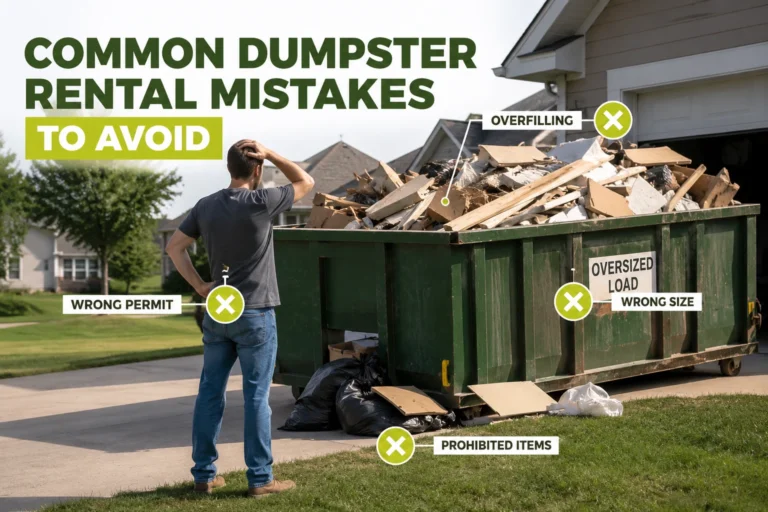
The top of the dumpster has a fill line that is visible. Trash beyond that point cannot be transported safely through cities due to safety concerns. It is more practical to stop and schedule a pickup than continue stacking as the fill line approaches. Keep your project in mind when picking the size, so you don’t have to face fill line problems.
7. Keep the Area Around the Dumpster Clear
Loading the dumpster efficiently does not just mean what’s inside it; it also means which things are present around it. Leave a clear space around it. Because when the rental period ends, the pickup truck needs a lot of room to get in. It seems like a minor issue, but this is the major reason behind delayed pickups.
8. Know What Cannot Go in the Dumpster
Some things cannot fit in a regular container because they can cause damage to it. Or some things require separate handling, like batteries as well as appliances that contain Freon.
We need to know whether something is legal or not before putting it into the dumpster. When you take care of things, banned items should not go in the dumpster. Keeping the project free from banned substances ensures your project goes smoothly.
9. Load Smart to Keep Your Project Moving
The correct loading of a dumpster results in successful operations. Pickup happens on schedule. It keeps the load secure and utilizes space as planned. It’s not about trying harder; it’s about doing it right. Whether it’s a small weekend cleanup or a bigger job, spending a few extra minutes in planning and layering is what really makes the difference.
Conclusion
Before you get started, take a minute to think about what kind of waste you’re actually dealing with. A little planning goes a long way; you’ll get more done without the headache, whether it’s clearing out a garage or a full renovation. Build a solid base, and don’t let the weight pile up on one side. Load things in the right order, and you’ll save yourself both time and money.
Frequently Asked Questions
What is the best way to fill a dumpster?
The best way to fill a dumpster is to create a stable base with heavy materials, stack larger items strategically, and use smaller debris to fill gaps. Spread the weight evenly across the container and never load waste above the fill line or exceed the weight limit.
Why shouldn’t you fill a dumpster above the fill line?
Because it is not safe to transport. It can shift and fall at any time. Most companies do not pick up the load if it crosses the fill line.
What items are not allowed to be put in a dumpster?
Batteries, tires, paint, chemicals, and appliances containing Freon are commonly banned. It’s worth checking with your provider’s specific list before you start loading.
Why does weight distribution matter if the dumpster isn’t full yet?
An unevenly loaded dumpster can shift or tip once it’s being moved, even if there’s technically room left. Spreading the weight out keeps the load stable and safer to pick up.
How do you avoid needing a second dumpster?
Break items down as you load, keep the base solid and even, and fill gaps with smaller debris instead of leaving empty pockets. Most people who end up needing a second container could’ve fit everything in one container properly.
Is it safe to stand inside a dumpster during loading?
Standing inside a dumpster is not a good idea. Things like pieces of trash, sharp objects, and things that can cause you to slip, get cut, or fall. If you have to put things in, make sure you use the safety tools and only go inside when the dumpster is steady, mostly empty, and has no dangerous things in it.
Can you damage a dumpster by loading it incorrectly?
Yes. If you drop heavy things from high up, or if you put all the weight in one spot. And if you try to push big things into the container, you can hurt the dumpster. Putting weight evenly and being careful when you fill it helps keep the dumpster and your things safe.
Can you put a mattress in a dumpster?
Yes, most companies that rent out dumpsters allow mattresses. Some places might charge an extra fee because they have to process mattresses specially. Ask your company first because rules about how to get rid of things can be different depending on where you live.
When should you use the dumpster’s rear door?
Use the door when you are putting in heavy items, big items, or things that have wheels, like appliances, furniture, building materials, or things in a wheelbarrow. It is safer and easier to walk things through the door than to lift them over the side of the dumpster.
Can you put wood in a dumpster?
Yes, wood that has not been treated, like boards, planks, sheets of wood, fences, and other clean wood, is usually allowed in construction dumpsters. But wood that has been treated, like railroad ties, or wood that’s not clean might not be allowed depending on local rules and the company you rent from.
Should you load a dumpster through the back door or over the top?
Use the back door for heavy or bulky materials that can be walked or rolled inside. Load lighter debris over the top once the base has been built. Using both methods helps distribute weight evenly and makes better use of the available space.
Can you throw carpet in a dumpster?
Yes, carpet and carpet padding are accepted by most dumpster rental companies. For easier loading and better use of space, cut large sections into smaller rolls before placing them in the dumpster. Some areas may have recycling requirements for commercial quantities.
Can you open the back door of a roll-off dumpster?
Yes. Most roll-off dumpsters include a rear swing door that opens for easier loading. Make sure the dumpster is on level ground, unlatch the door carefully, and keep clear of the swing area while opening or closing it.
Can you throw a couch in a dumpster?
Yes, couches are accepted in most dumpster rentals. Removing the cushions, legs, and other detachable parts before loading reduces the amount of space the couch occupies and helps you maximize the dumpster’s capacity.