Common Mistakes When Using a Dumpster Rental Service
People mess up dumpster rentals in pretty much the same ways every time. Choosing the wrong size, overfilling past the fill line, adding banned items, and ignoring weight limits. All of these mistakes are easy to avoid if you know what to check before delivery, and skipping any of them can lead to extra fees, delays, or a rejected pickup.
Key Takeaways
- Choosing the right size the first time saves more than anything else on this list.
- Ask about the weight limit before you book, not after you’ve started loading.
- Check what’s banned before anything goes in; one wrong item can cost more than the rental.
- Check permit rules first if the dumpster isn’t sitting on your own driveway.
- Book earlier than you think you need to, especially during spring and fall.
- Keep an eye on the fill line and weight as you load, not just at the end.
- Leave real space around the dumpster: trucks need about 60 feet to move.
- Schedule the pickup yourself, since most companies won’t do it automatically.
Common Dumpster Rental Mistakes To Avoid
While Renting A Dumpster
A few slip-ups cause most of the trouble. Here’s what to keep an eye on while renting a dumpster:
Choosing the Wrong Dumpster Size
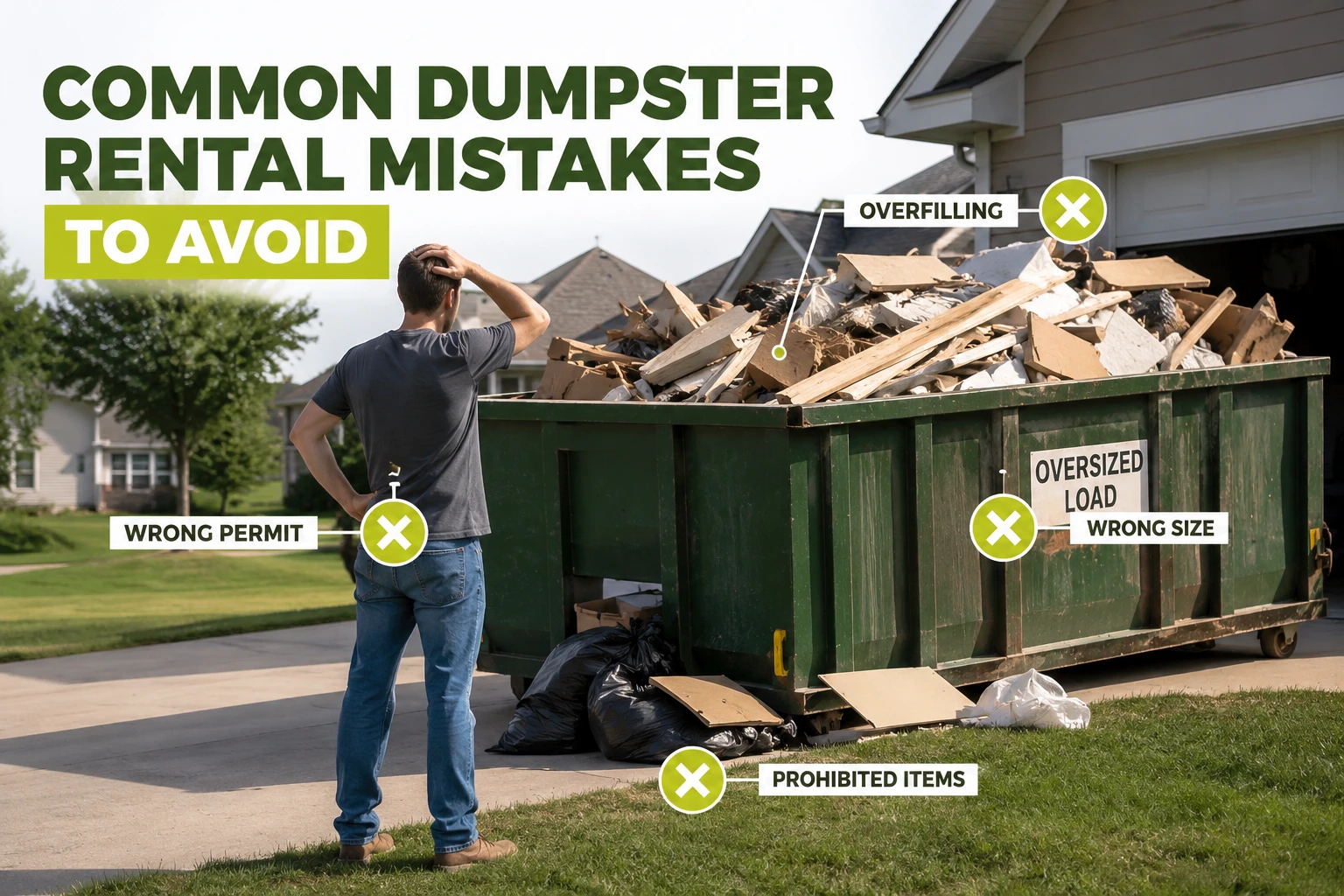
If you pick the dumpster that is too small, then you’ll run out of space halfway through your project, and you have to book a second dumpster and pay for two deliveries instead of one. Pick something too large, and you’re paying for space you never use. A garage cleanout rarely needs more than a 20-yard dumpster, while a full home renovation or roofing job usually calls for 30 yards or more. When you’re not sure, call your rental company and ask about every single detail that you are not sure about.
Not Asking About Weight Limits Before You Book
Every dumpster has a weight limit. A 20-yard dumpster might look half empty, but if you’re loading concrete or dirt, it can still hit its weight cap. Ask about the weight limit before you book, not after you start loading. If you want to get rid of heavy stuff, select a dumpster that is made for heavy debris.
Skipping Questions About Prohibited Items
People are usually mistaken because they think trash is trash. But it is not; many kinds of waste are not allowed to be thrown in a standard dumpster, like chemicals, pesticides, and wet paints, etc. Every company has its own list; ask about it before delivery. Otherwise, one wrong item can cost you more than the whole dumpster.
Ignoring Local Permit Requirements
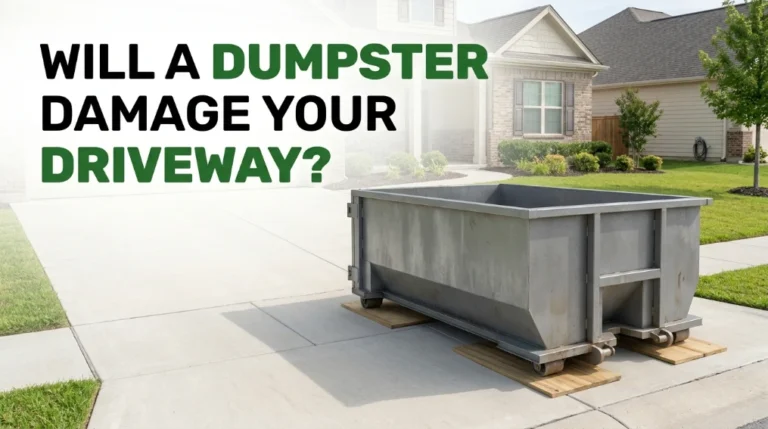
Placement rules vary from city to city, and this is one of the quieter dumpster rental mistakes because you get to know when you’re already fined. If the dumpster is in your driveway, you’re usually not fined. This is your property. If it’s going on a street, sidewalk, or any public property, most municipalities require a permit first. A quick call to your local permitting office or your rental company clears this up in minutes.
Underestimating the Rental Period
Most rentals give you five to seven days. And most projects take more time than planned. If you don’t have a proper idea for your project, then you end up paying more. If you think it will take more time, ask about extending before you book it.
Booking Too Late for Your Timeline
Dumpster availability is difficult during spring cleanups and fall renovation season. That’s why booking it a week or two before gives you more control over size, delivery date, and pricing.
Mistakes to Avoid After the Dumpster Is Placed
Overfilling Past the Fill Line
Every dumpster’s got a fill line a few inches below the rim, and this is where most people slip up after delivery. Loads need to be tarped for the ride, and a tarp just won’t hold down debris piled above that line. If you load it too high, then the driver might just reject it at pickup, and you have to pay extra for it.
Tossing in Banned Items After Delivery
Even if the dumpster is placed in your driveway, the same restrictions apply. Some companies inspect loads before pickup, and if they notice any kind of violations on the spot, then it simply means you have to pay a fine. If a hazardous item slipped in by accident, call your rental provider before pickup day instead of hoping it goes unnoticed.
Loading Heavy Debris Unevenly
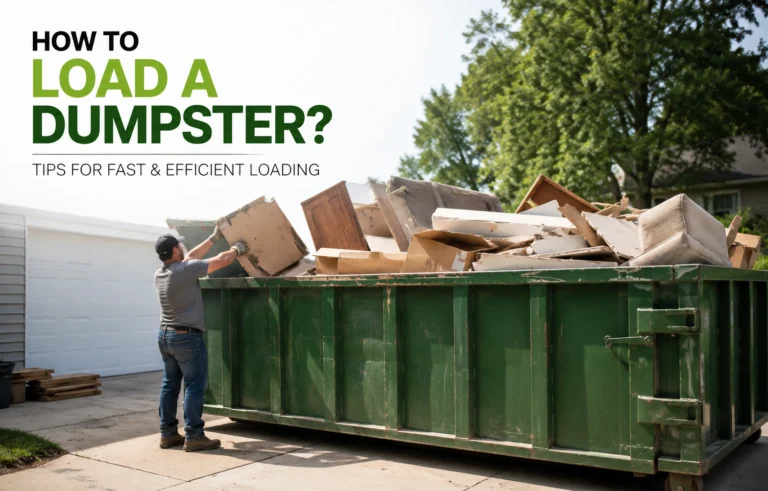
Dumping everything on one side instead of spreading the weight across the container is one of the most common dumpster rental mistakes. Place heavy, flat materials at the bottom, spread them evenly across the length of the container,
Not Watching Your Tonnage as You Load
Try to keep a rough idea of what you’re loading as you go, instead of just throwing everything in while keeping your eyes closed. If you go over the weight limit, then you’re paying extra per ton, on top of what you already paid for the rental.
Blocking Access Around the Dumpster:
Don’t park in front of it, and don’t stack stuff nearby. Don’t let the equipment box it in. All of that just delays pickup. The truck needs about 60 feet of clear space to move. Keep it open the whole time, not just on delivery day.
Forgetting to Schedule Pickup
Most dumpster companies don’t automatically come to get the container once your rental period ends. You have to call and schedule it. Forgetting this step is a small mistake that leads to extension fees even when your project is already finished. Set a reminder a few days before your rental period ends so pickup gets booked on time.
Plan before you book, and plan again before you load. A short phone call at either stage solves almost everything on this list before it becomes a costly problem.
Frequently Asked Question
What’s the most common mistake people make when renting a dumpster?
The most common one is choosing the wrong size. If you select a small size, there are more chances that you will have to buy a second one, and going too large means paying for space that never gets used.
Conclusion
Most dumpster rental problems come due to common mistakes like the wrong size, an overfilled load, banned items, ignored weight limits, and poor placement. None of it is complicated once you know what to watch for. A quick call before you book and a little care while you load is usually all it takes to avoid fines, delays, or a second rental you didn’t plan on.